QUICK ANSWER
Begin with an assessment of the retained structure. Ask for separate scopes for localized repair, resurfacing and replacement where those options are appropriate.
Repair, resurface or replace: define the scope
Treat the assessment as a decision gate. Ask which areas were accessible and which remain uncertain, then request an explanation of why the retained components are suitable. Do not test a questionable railing or deck by loading or shaking it yourself.
Cost comparisons should include removal, access, stairs, railings, finishes and any work to the supporting assembly. A fixed percentage of replacement cost cannot establish whether a repair is sound. Compare what each proposal solves and the limitations that remain.
| Option | What it can involve | What must be established |
|---|---|---|
| Localized repair | Selected components | The concern is limited and repairable |
| Resurfacing | New walking surface on retained support | The retained assembly suits the selected system |
| Partial rebuild | Defined sections and connections | New and retained work can function together |
| Full replacement | Removal and a new deck scope | Design, access, approvals and complete inclusions |
Document visible concerns without testing the structure
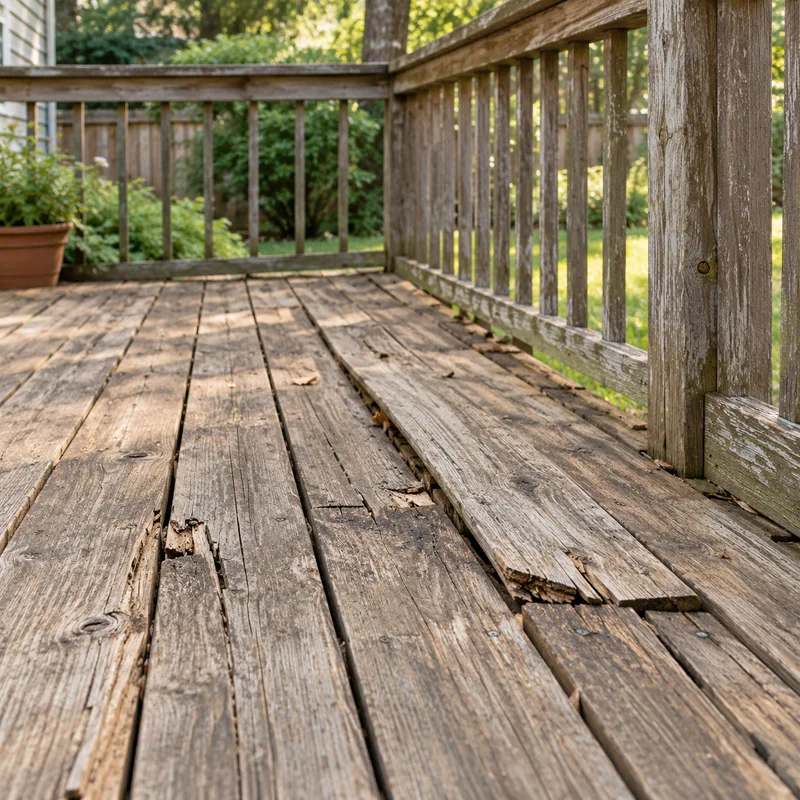
From a safe position, photograph obvious changes such as split boards, a leaning railing or a damaged stair. Include a wider view to show where the concern sits relative to the house. Do not shake railings, jump on a questionable section or crawl underneath an unstable deck to test its strength. If a section appears unsafe, keep people off it while arranging an assessment.
Note when you first observed the problem, whether it has changed and any repairs you know about. Tell the contractor if an upper deck sits over a living area or if access underneath is limited. These details help define the visit without asking you to diagnose the structure yourself.
Separate the surface from the supporting assembly
Ask the contractor which parts were assessed and which could not be seen. The conversation should address the condition relevant to your project, including decking, railings, stairs, supports and connections. Request photographs and a plain-language explanation of the findings. An estimate for surface replacement should not be interpreted as confirmation that every hidden part is sound.
If the assessment identifies concerns beyond the contractor’s scope, ask what additional expertise is needed before deciding on repairs. Clarify whether opening a concealed area is part of the initial price and how any new findings will be documented. Keep that investigative work separate from optional appearance upgrades.
Compare a targeted repair with replacement
A targeted proposal might address specific damaged components while retaining serviceable material. A broader proposal may replace the surface, railings or the complete deck. Ask each contractor to explain why the recommended approach fits the observed condition and what limitations remain after the work.
Compare the same footprint and intended use before comparing totals. If one proposal adds stairs, changes the layout or uses a different railing system, identify those differences explicitly. Ask whether the retained assembly is suitable for the proposed materials. A lower initial price is only useful when you understand the work it includes and the responsibilities it leaves to you.
Choose materials with maintenance in mind
Discuss how the deck is used: barefoot traffic, outdoor dining, pets, shade or exposure to afternoon sun. Ask to see product samples and review manufacturer care instructions. Discuss cleaning, finish maintenance, replacement-part availability and how the selected material will look alongside any retained sections.
Avoid treating broad labels such as wood or composite as complete specifications. Record the actual product, profile, finish and fastening approach in the proposal. Ask who is responsible for ordering enough material, storing deliveries and handling damaged pieces. Those practical details affect both the schedule and the final appearance.
Put the deck repair scope in writing
Ask who will confirm local permit requirements and arrange any required inspections. Record the demolition and disposal plan, access arrangements, landscaping protection and the process for approving changes. Before hiring, check the applicable licensing or registration authority and references for comparable work.
Check the applicable business credentials and insurance evidence before hiring, and ask for references for comparable outdoor work. Keep those business checks separate from the assessment of the deck itself. A clearly described repair boundary, a compatible material package and an agreed process for hidden damage are the practical basis for comparing the job.
- Separate assessment, repairs and optional upgrades.
- Specify retained and replaced components.
- Confirm the selected products and finish work.
- Include cleanup, disposal and access protection.
- Document how additional discoveries affect cost and timing.
Resource: FTC: checking a contractor and the written scope ↗
Compare deck and fence quantities separately
For decking, identify surface area, rails, stairs, framing retained and disposal. For adjacent fences or gates, record length, height, posts, access and the operating result separately. Replacing boards is different from rebuilding supports, and a new gate may require a different connection than the one being removed. Ask how foundations and existing connections will be assessed before the finish hides them. Product selections, site access and surrounding landscaping affect both scopes. Keep optional changes to the layout separate from repairs so the price does not obscure which problems are being solved.
Finish with a walkthrough and maintenance plan
Ask when the repaired deck can be used and whether any finish needs additional time before furniture returns. Walk through the completed scope with the contractor and record remaining items. Collect care instructions and written warranty information for the work and products.
Your initial request can focus on the facts: “Several deck boards are split and the stair area needs assessment. We would like a written recommendation comparing repairs with replacement if necessary.” Include photos, your location and any access restrictions. The goal is a usable outdoor space supported by a repair decision you understand.
Use the contractor estimate checklist to keep a resurfacing quote separate from a full rebuild. →
Common questions
Can I replace deck boards without replacing the frame?
Sometimes, after the supporting assembly and connections have been assessed. Ask the installer to confirm suitability for the selected decking and identify any preparation or reinforcement in the written proposal.
Does an old deck always need replacement?
Age is useful background, but it does not describe the condition of every component. Ask for findings rather than accepting age alone as the repair or replacement decision.
What should a deck repair quote include?
Look for the identified components, materials, disposal, access, finish work and approval process for new discoveries. Ask who handles any applicable permits and inspection requirements.
Ready to describe your project?
Start with what you know. You can add photos and more details along the way.
Start your project →