QUICK ANSWER
Ask what caused the damage and how the repair connects to the retained assembly. New tile is not a substitute for resolving movement or water-management problems.
Distinguish appearance from assembly failure
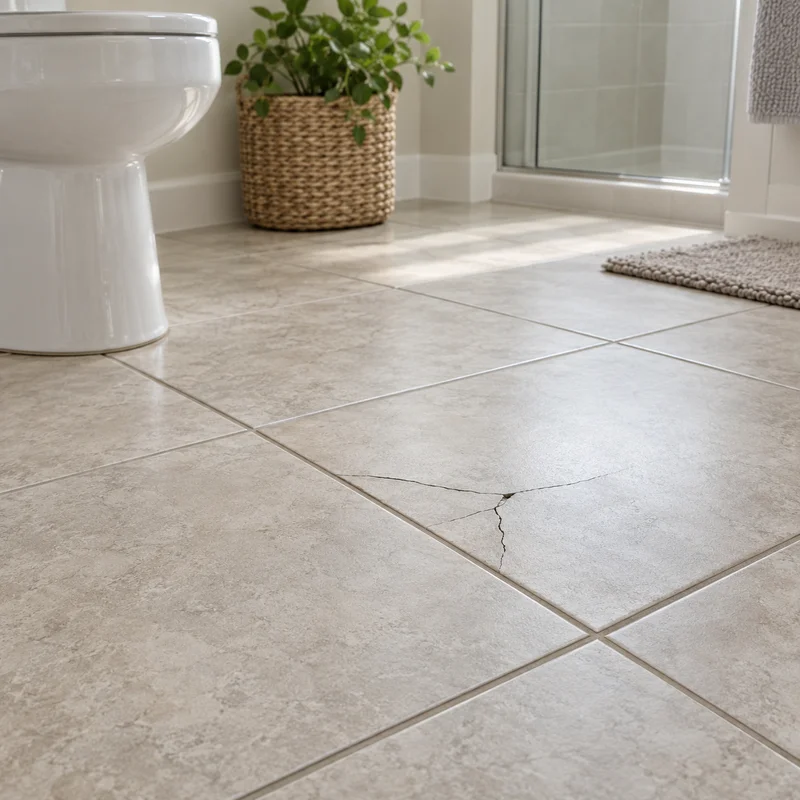
Record the location, extent and history of cracks, loose pieces or discoloration. Ask whether the contractor recommends a surface treatment, isolated replacement or investigation below the finish. Stone and manufactured tile can require different products and repair approaches, so identify the material when possible. A recurring defect should not be treated as a fresh cosmetic patch without considering why it returned. Avoid removing finishes casually in a wet area or a location where supporting conditions are uncertain.
| Decision | What to record |
|---|---|
| Cause | Finish damage versus underlying movement or moisture |
| Boundary | Matching material and retained assembly |
| Use | Installation checks, waiting periods and care |
Assess the supporting surface and wet-area boundary
Ask how the proposal addresses substrate condition, movement and compatibility with the installed materials. In a shower or other wet area, establish whether opening the finish affects the water-management assembly. A small tile replacement can become a broader task when the underlying system cannot be repaired reliably within that opening. Request an explanation of the repair boundary and any further assessment required. Keep the homeowner's visible observations separate from a professional conclusion about concealed components.
Compare matching, layout and finishing work
Check whether replacement tile or stone is available in a suitable size, finish and appearance. Matching a discontinued product may require a larger planned area rather than a patch. Specify edges, transitions, cuts, trim and the treatment of adjoining finishes. Ask which preparation, removal, disposal and protection tasks are included. Material price alone does not capture the labor involved in a small, complex repair, particularly when access or matching limits how work can be performed.
Agree on installation and care requirements
Discuss product compatibility, necessary waiting periods and when the area can be used again. Ask how the completed work will be checked and which care products are suitable. A polished stone appearance is not a reason to assume every cleaner or sealer is appropriate. Record the installer's maintenance guidance and warranty boundary. If more damage becomes visible during removal, review the findings and revised scope before the contractor extends the work into another area.
Common questions
Can a single cracked tile be replaced?
Sometimes, when the cause, adjoining assembly and replacement material support a localized repair. Ask whether the visible crack indicates movement or another issue that a replacement alone would not address.
Is regrouting enough to repair a shower leak?
Do not assume it is. The water path and assembly need assessment; changing the visible joint material may not address the underlying failure.
Why can a small tile repair be expensive?
Preparation, matching, access, protection and restoring the assembly can dominate the labor. Compare those tasks rather than estimating cost from the number of new tiles.
Ready to describe your project?
Start with what you know. You can add photos and more details along the way.
Start your project →