QUICK ANSWER
Consider localized repair, partial replacement and full replacement as separate options. Ask what each solves, what remains and how underlying damage will be handled.
Compare three siding scopes before choosing
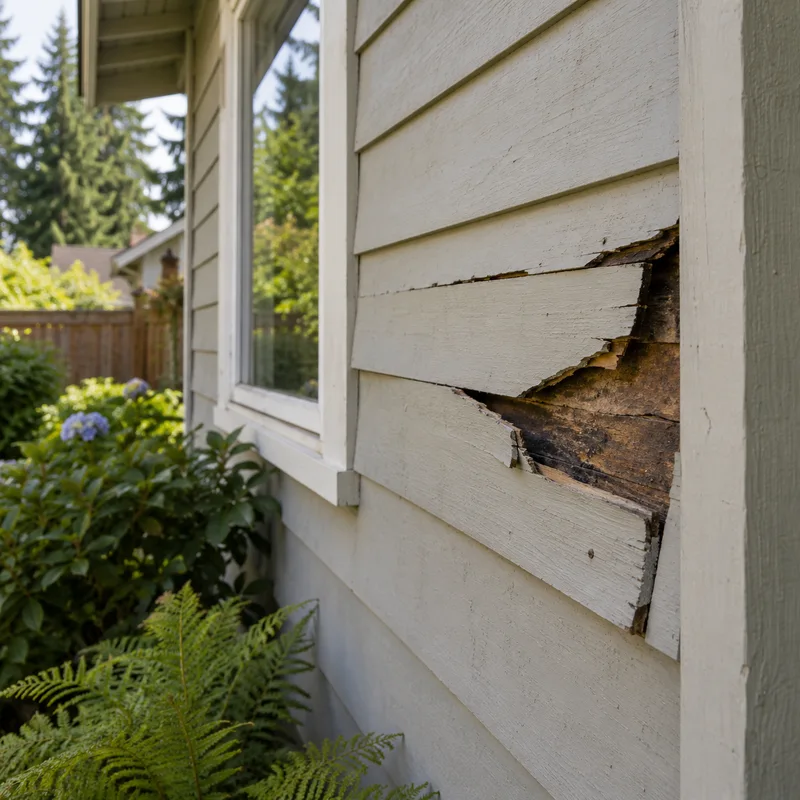
The useful middle option may be one wall or another clearly defined area. Ask whether that boundary allows the contractor to complete the necessary work and achieve an appearance you can accept. A limited repair can become impractical if matching material or suitable transitions are unavailable.
Estimate comparisons should identify material, removal, underlying repairs, trim, finishing and protection of the property. Keep discovery allowances explicit. Neither appearance nor a generic lifespan figure establishes the condition of the concealed wall.
| Scope | Best question to ask | Cost detail to keep visible |
|---|---|---|
| Localized repair | Can this area be repaired and matched? | Minimum visit and material sourcing |
| Partial replacement | Where should the work stop? | Transitions to retained siding |
| Full replacement | Why is the broader scope needed? | Removal, trim and underlying work |
| Related opening repair | Does a window or door detail need attention? | Which trade handles the adjoining work |
Photograph the affected area in context
Take a wide photograph of the wall and a closer view of visible damage from a safe position. Note nearby windows, doors, roof edges and downspouts. Tell the contractor whether the condition appeared after a storm or has changed gradually.
Record any related indoor staining without assuming the two observations have the same cause. Mention previous repairs and the approximate age or product name if known. Do not pull panels away or probe damaged trim to confirm a theory before the professional has assessed the area.
Discuss what the inspection can establish
Ask which components can be assessed without removal and which remain concealed. Request a clear explanation if opening part of the wall is recommended. Agree on how that work will be authorized, documented and temporarily protected while decisions are made.
If moisture-related damage is suspected, ask how the source will be investigated. Replacing the visible surface should be part of an explained repair approach. Keep underlying repairs and cosmetic upgrades distinct so that the proposal does not blur essential work with optional improvements.
Consider material matching and availability
For a localized repair, ask whether matching panels or boards are available and how the repaired area may look beside weathered material. Discuss profile, thickness, texture and color rather than relying on a general description such as white siding.
If a perfect match is unavailable, ask for practical alternatives and the boundaries of each option. Replacing one section, one elevation or the full exterior produces different scopes. Request samples where possible and review them alongside the retained surface before ordering.
Compare trim and installation details
Check whether the estimate includes the affected trim, penetrations and adjoining finish work. Ask how the selected system’s installation requirements will be followed and which existing components will remain. Product choice alone does not describe the whole job.
Clarify demolition, disposal, property protection and access needs. Ask who confirms applicable local requirements and handles any necessary inspection. Set an approval process for concealed damage so discoveries do not become an open-ended instruction to continue without a revised scope.
Compare the wall assembly and restoration boundary
Ask which cladding, trim, flashing and surrounding finish work is included. Access, removal and matching can make a small damaged area more involved than its size suggests. If water has entered the wall, distinguish the visible cladding from investigation and repair behind it. Record how added findings will be priced and photographed. Specify product profiles and finish expectations when retained material remains beside new work. Two proposals that cover different layers of the wall are not comparable from their totals alone, even when both are described as siding repair.
Plan the walkthrough and future care
At completion, review the work against the written proposal, including retained sections and agreed finish repairs. Collect product information and manufacturer care guidance. Ask how to report a concern and keep the repair photographs with the final invoice.
Your first request can be concise: “Several siding panels on the west wall are damaged, and nearby trim has visible wear. We would like an assessment and options for a localized repair.” Add your location, photos and access constraints so the contractor can plan a useful visit.
For damage around a window, compare the window repair options alongside the exterior scope. →
Common questions
Can I replace siding on only one side of the house?
Ask whether a partial project is appropriate for the material and observed damage. Review matching, transitions and the condition of the other walls before committing to the boundary.
Should I paint damaged siding instead of replacing it?
First establish what is damaged and whether the surface is suitable for refinishing. Paint does not resolve an unidentified water-entry problem or replace material that needs repair.
How can I compare siding replacement estimates?
Use the same wall areas, product specifications, trim scope and assumptions about concealed conditions. Identify disposal, access and finish work so a low total does not hide omitted tasks.
Ready to describe your project?
Start with what you know. You can add photos and more details along the way.
Start your project →