QUICK ANSWER
Ask for evidence of the failure and a written explanation of what each option addresses. A repair and a replacement are comparable only when their limitations are clear.
Find the water path before choosing a product
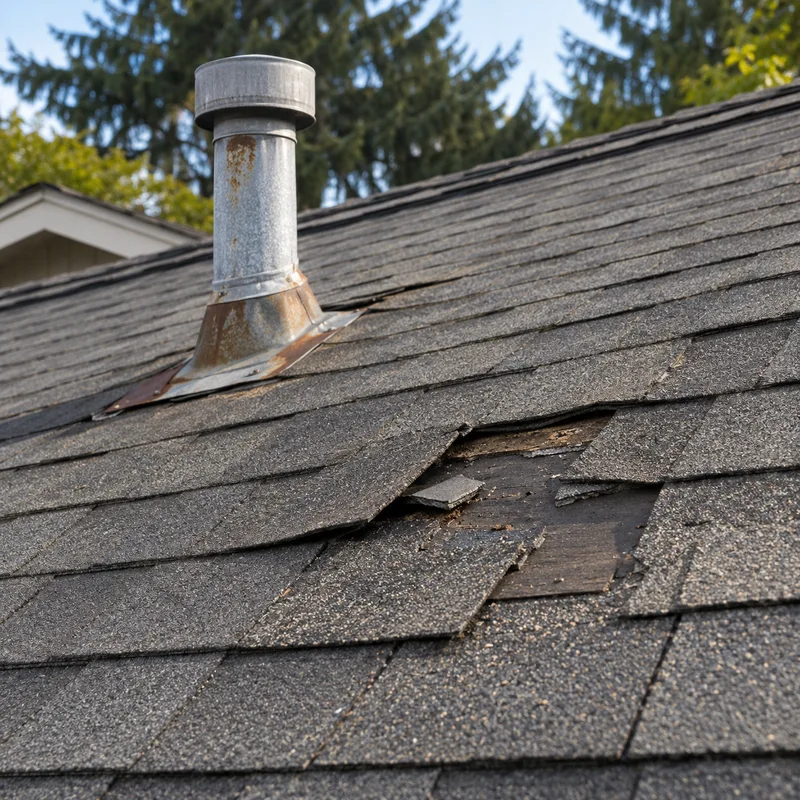
Record where the indoor symptom appears and when it changes, but leave access to the roof and concealed spaces to appropriate professionals. Water can travel before it becomes visible, so the stain is not a complete diagnosis. Ask the roofer to document the assessed covering, flashing and transitions. A proposal should explain the likely entry route and any uncertainty that remains. Keeping an observation separate from a confirmed cause helps prevent a cosmetic repair from being mistaken for a solution.
| Decision | What to record |
|---|---|
| Diagnosis | Observed failure and likely water path |
| Options | Retained materials and repair limitations |
| Handover | Photographs, warranties and maintenance |
Assess the roof around the damaged area
A localized repair depends on the condition of adjoining material and the ability to integrate the new work. Ask whether the surrounding covering can be retained and how the proposed repair will connect with it. Review previous repair records if available. Widespread deterioration, repeated unresolved failures or damaged supporting components can change the recommendation, but photographs of one problem area do not establish the condition of the entire assembly. Request representative findings rather than an explanation based only on roof age.
Compare the boundaries of each option
Ask a repair bidder to identify the components retained, the work replaced and the conditions excluded. Ask a replacement bidder about removal, supporting material assessment, transitions, drainage and restoration. Clarify how additional damage discovered during removal will be documented and priced. Compare matching parts of the proposals and keep optional upgrades separate. A lower immediate cost may leave another task pending; a larger scope may include work that is unnecessary. The evidence should explain the difference.
Plan delivery, protection and handover
Discuss property access, debris handling and how the home will be protected while the covering is open. Confirm any required approvals, the responsible installer and relevant product requirements. At completion, request photographs of work that is no longer accessible, warranty documents and maintenance instructions. Separate the workmanship commitment from the manufacturer's product coverage. Do not climb onto the roof to perform a final check yourself; establish a safe documentation and walkthrough process with the contractor.
Common questions
Does roof age decide whether to replace it?
Age is useful context, but observed condition, assembly details and the failure matter. Ask why the proposed scope fits the inspection findings rather than choosing from age alone.
Can a repair be priced from a photo?
A photo helps explain the concern. A reliable final scope may require an on-site assessment of transitions and adjoining materials, especially when the water path or concealed condition is uncertain.
Should gutters be part of the roofing estimate?
Clarify that explicitly. Roof covering, gutters and downspouts may be assessed together but can be separate scopes. Record which drainage work is included in each proposal.
Ready to describe your project?
Start with what you know. You can add photos and more details along the way.
Start your project →