QUICK ANSWER
Active water entry needs prompt attention. Stay off the roof, avoid affected electrical fixtures and unstable ceilings, and request a documented assessment before choosing repair or replacement.
Match the observation to the next question
A roof leak can leave an indoor mark away from the point where water enters. Give the roofer both the room location and the outside view rather than assuming the shingle directly above the stain is responsible. Photos taken at different times can help explain whether the mark is growing.
Ask the roofer to distinguish immediate water-control work from the permanent repair. The written scope should say which roof areas were assessed, what could not be seen and whether interior drying or finish repairs require a separate provider.
| What you notice | What to document | What to ask |
|---|---|---|
| Water entering indoors | Timing and affected room, from a safe position | What immediate response is available? |
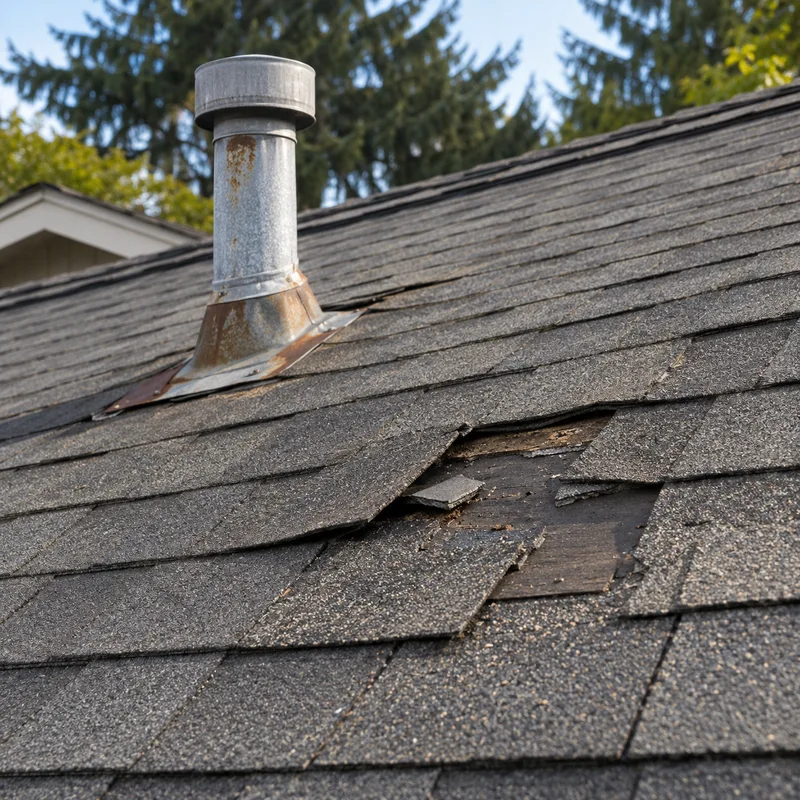
| Lifted or missing shingles | Roof side and a ground-level photo | Is damage localized or part of wider deterioration? |
| Stain near a roof penetration | Approximate location and weather pattern | Will the inspection include the surrounding details? |
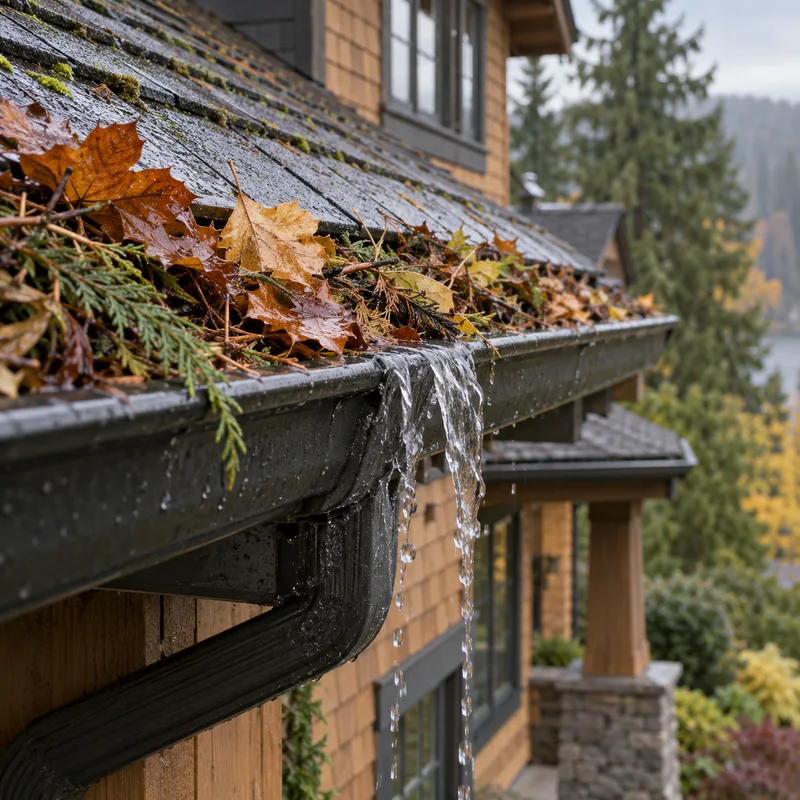
| Water spilling at the eaves | Gutter section and downspout location | Is drainage part of the same visit? |
Start with what you can see from the ground
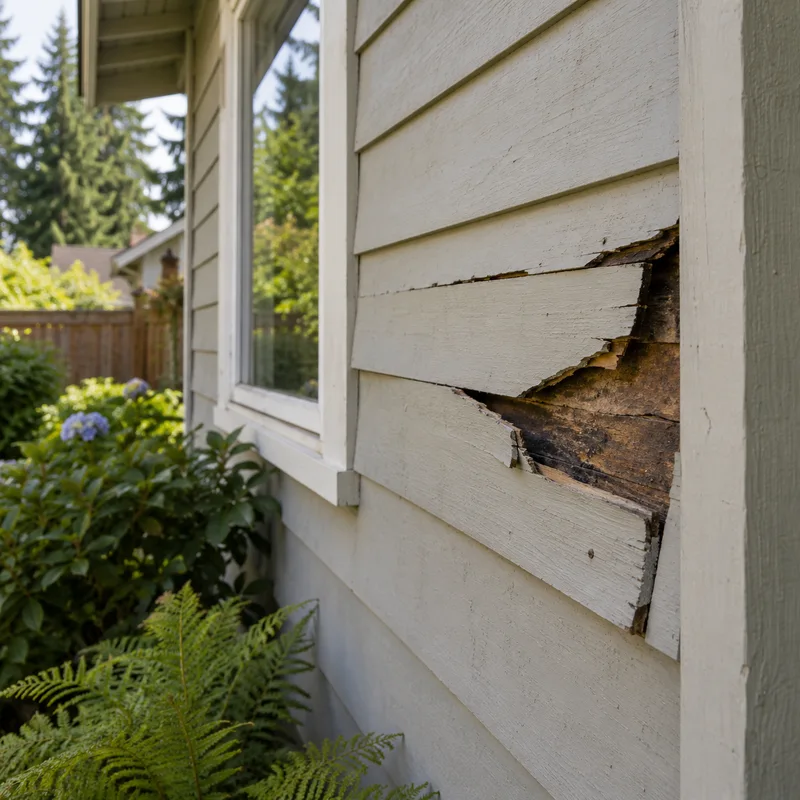
Look for obvious changes: shingles that appear lifted or missing, a loose edge, debris collecting in a roof valley or a gutter pulling away from the house. Take an overall photo to show the location and a zoomed photo if your camera can capture the detail. Stay off the roof and avoid leaning from windows to get a closer view.
Photographs are a starting point, not an inspection. A visible patch of damage does not tell you the condition of the layers beneath it. Give the roofer enough context to plan a visit rather than asking for a definitive repair price from a single close-up.
- Which side of the house is affected?
- When did you first notice the change?
- Did it appear after a particular storm?
- Do you have older photos for comparison?
Record indoor changes without guessing at the cause
If you notice a new ceiling mark or damp area, photograph it and note the date. Record whether it changes during rain, after rain or independently of the weather. Mention nearby plumbing or rooms above the area. That information helps the person assessing the problem decide what to investigate.
Avoid painting over a new stain before its source has been assessed. A cosmetic repair can make the mark less visible while leaving the underlying issue unresolved. If water is actively entering, arrange prompt professional help; keep people away from sagging ceilings or water near electrical fixtures.
Describe gutter problems separately
Overflowing gutters and a roof leak may occur during the same storm, but they are not automatically the same job. Note where water spills, whether a downspout appears disconnected and whether the problem affects one section or the whole roofline.
Ask whether the proposed visit includes gutters, downspouts and roof drainage, or only the roof covering. A clear scope helps you avoid booking an inspection that does not address the part of the system you are concerned about. Do not climb a ladder during wet or windy weather to investigate.
Ask for findings you can understand
Request photos of the inspected areas and a written explanation of the likely source. Ask which repairs address the immediate problem and which are maintenance recommendations. If replacement is proposed, ask what findings support it and whether a targeted repair is a reasonable alternative.
The National Roofing Contractors Association encourages preventive maintenance of residential roof systems and recommends an experienced roofing contractor when an inspection identifies needed repairs. Use that as a reason to establish a maintenance plan suited to your roof, not as a promise that maintenance prevents every leak.
Send a useful roofing request
Include your city or ZIP code, the visible issue, how long it has been happening and a few photos. Add the roof’s approximate age only if you know it, and mention any previous repairs you can document. It is better to say ‘age unknown’ than to make an estimate sound certain.
A useful request might read: ‘We noticed a new ceiling stain after heavy rain. It is near the back bedroom window, and a few shingles look lifted on that side. We would like an inspection and a written repair recommendation.’ This explains the concern while leaving the diagnosis to the person who can inspect it.
Common questions
Does a ceiling stain always mean a roof leak?
No. Plumbing and other moisture sources can also affect ceilings. Explain whether the stain changes with rain or fixture use, and let the inspecting professional establish the cause.
Should I repair or replace a leaking roof?
Ask whether a defined repair can address the identified source and what condition remains elsewhere. Replacement should come with a documented explanation of why a smaller repair is unsuitable, not just a recommendation based on age.
What affects roof repair cost?
Access, roof material, extent of damage, affected details and concealed conditions all matter. Ask whether investigation, temporary protection, disposal and related repairs are included. A photograph alone rarely resolves all of those questions.
Ready to describe your project?
Start with what you know. You can add photos and more details along the way.
Start your project →